2025
December 1, 2025 — Doctoral course on transport theory and simulation
We are pleased to announce that, as part of the educational activities of the UniMoRe PhD School “Physics and Nanoscience” (PNS), we will host the following advanced course:
Title: “Theory and Numerical Simulation of Mass, Charge and Heat Transport”
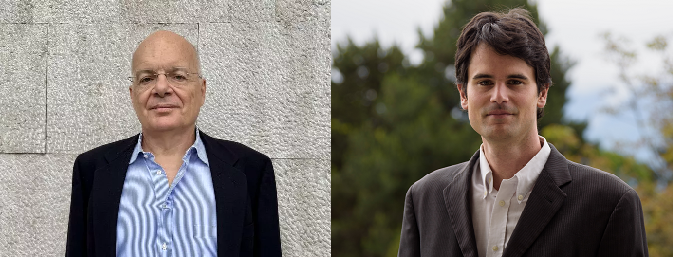
Lecturers: Prof. Stefano Baroni (SISSA, Trieste), Dr. Federico Grasselli (FIM, UniMoRe)
Dates:
- 1 December — 11:00–13:00
- 2 December — 14:30–16:30
- 3–5 December — 11:00–13:00
Location: Physics Building (MO-17), 3rd floor — CNR-Nano Seminar Room
Abstract:
This course offers a unified overview of the theoretical and computational foundations of transport phenomena in condensed-matter systems. It begins with the basics of non-equilibrium thermodynamics, introducing conserved extensive variables, continuity equations, hydrodynamic fluctuations, and Onsager’s linear relations between fluxes and forces—illustrated through Fick’s law and Einstein’s 1905 work on Brownian motion.
The framework of linear-response theory is then developed, with emphasis on the Green–Kubo and Einstein–Helfand formulations of transport coefficients, the approach to equilibrium, and the emergence of an arrow of time.
Modern perspectives are introduced by examining the invariance principles of transport coefficients and their application to thermal and electrical conductivities. These concepts provide a rigorous basis for using machine-learning interatomic potentials and oxidation numbers in numerical simulations of heat and charge transport in electronic insulators.
The final module covers state-of-the-art data-analysis techniques for extracting transport coefficients from simulations, including spectral and cepstral analysis and their multivariate extensions, complemented by hands-on exercises.
November 25-28, 2025 — Workshop “Uncertainty Quantification in Atomistic Modeling”, Lausanne (CH)
The CECAM & Psi-k funded workshop “Uncertainty Quantification in Atomistic Modeling” (UQAM) successfully concluded this week. Organized by Sanggyu Chong (EPFL), Federico Grasselli (UNIMORE), Genevieve Dusson (CNRS), Michael Herbst (EPFL), Julia Westermayr (ULeipzig), with the support of DAEMON COST, CECAM, Psi-k, and Royal Society of Chemistry Ed., the event gathered experts across UQ and atomistic modeling. The program featured keynotes, invited and contributed talks, and hands-on tutorials (available online: Atomistic ML (PET-MAD) tutorial, UQ for Atomistic ML tutorial, and UQ for DFT tutorial). The strong engagement highlighted the community’s growing focus on uncertainty-aware, data-driven atomistic simulations. The organizers look forward to future editions and to the impact of the collaborations initiated at UQAM. More in related Sanggyu’s LinkedIn post.
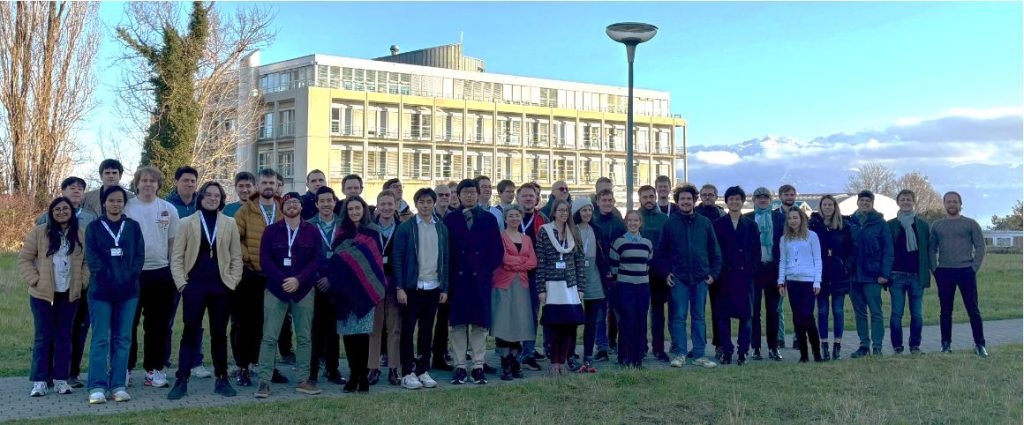
Workshop’s venue: CECAM, EPFL Campus, Lausanne (CH), November 25-28, 2025
November 1, 2025 — New master’s graduate Andrea Biondini joins our PhD program
We are pleased to congratulate Andrea Biondini on completing his Master’s degree with the thesis “Understanding the Origin of Single-Photon Emission in Nitride Materials.” Andrea will continue his research journey in Modena, joining the PhD program in Physics and Nanoscience.
We look forward to his contributions to our work on quantum materials and solid-state photonics.
October 30, 2025 — Workshop “Strengthening innovation via scientific and high-performance computing”, Modena (IT)
The workshop has been organized as the final event of the activities of Spoke 6 within the ECOSISTER project, involving faculty and researchers from FIM, DSCG, DIEF, and DISMI, as well as from CINECA, INFN, and other universities in Emilia-Romagna. The event will feature presentations of some of the main scientific results achieved within the project (talks and posters), keynote speakers from international companies engaged in various areas of innovation, and will conclude with an open discussion on the role of simulation and scientific computing, particularly within the regional context. Mandatory registration (free of charge): https://forms.gle/G6Yqg489xVuQNtj2A
Workshop’s venue: UNIMORE Data Center, via Gorrieri 31, Modena, on October 30, 2025
September 24, 2025 – Seminar of John Wilkinson (ISIS Neutron and Muon Source, UK); title: “Fluorides: The Most Exciting Materials for µSR – From Quantum Information to Excited States”
At 15:00 in S3 Seminar Room, 3st Floor, Physics building
Abstract: Muons provide a unique local probe for studying materials at the atomic level, and fluorides have emerged as particularly powerful model systems. In this talk, I will explore how fluorides can be used to track the muon’s quantum information through a sample, opening the door to new insights into how a muon interacts with its environment and enabling rigorous validation of DFT-calculated muon stopping sites. Building on these results, I will show how this approach informs our understanding of more complex magnetic systems, including antiferromagnets and Coulomb-phase materials. Finally, I will share a brief look at some early work on modelling the excited states of muonium, aimed at gaining new insights into the electronic structure of defects.
September 1-3, 2025 — Workshop “Two-dimensional Excitonic Insulators”, Modena (IT)
The excitonic insulator is the heretical paradigm of condensed matter theory, a macroscopic quantum coherent state made of excitons, electron-hole pairs bound by Coulomb attraction, which spontaneously form and condense at thermodynamic equilibrium. Following the three previous workshops organised in 2018, 2021 and 2023, we are organising the fourth edition of the Two-dimensional excitonic insulators Workshop, spanning three days of presentations, dedicated discussions and posters sessions.
The workshop will be held in Modena, Italy, from the 1st to the 3rd of September 2025
July 7, 2025 – Seminar of Paolo Pegolo (EPFL); title: “Spectral methods for the analysis of transport phenomena in electronic insulators”
At 10:00 in L1.3 Seminar Room, 1st Floor, Physics building
Abstract: Understanding and controlling heat and charge transport is central to the design of efficient thermoelectric materials and solid-state ionic conductors. However, the prediction of transport coefficients from equilibrium molecular dynamics remains challenging, requiring long simulations and robust statistical tools. I will present a unified framework based on spectral analysis of current time series, enabling the accurate computation of the full Onsager matrix—including both diagonal and off-diagonal transport coefficients—from a single statistical model. The method is demonstrated on molten salts, liquid water, and the Li₃PS₄ solid-state electrolyte. Building on this, I will explore the microscopic origins of thermal transport in the Li₃ClO antiperovskite, where a combination of ab initio, machine-learning, and empirical force-field simulations reveals the key roles of anharmonicity and ionic diffusion in characterizing thermal conductivity. Finally, I will briefly turn to the case of SiGe thermoelectrics, showing how spatially correlated mass disorder can strongly suppress lattice heat transport and provide a viable pathway to enhancing thermoelectric performance through engineered disorder.
June 27, 2025 – Seminar of Filippo Bigi (EPFL); title: “Machine learning unleashed: breaking symmetries and conservation laws in foundation models for atomistic simulations”
At 10:00 in S3 Seminar Room, 3rd Floor, Physics building
Abstract: Symmetry-conserving machine learning models, while physically principled, often suffer from limited computational efficiency. Here, we investigate symmetry-free approaches from different axes, showing that non-equivariant and non-energy-conserving machine-learned force fields can be used to provide remarkable acceleration of atomistic simulations, while producing correct physical observables. Furthermore, we present both symmetric and symmetry-free approaches for the long-time-step prediction of molecular dynamics simulations. This emerging paradigm, which aims to directly predict future positions and momenta in a simulation, affords an acceleration factor of up to two orders of magnitude compared to machine-learned interatomic potentials, with the potential to dramatically extend the time scales accessible to atomic-scale modeling.
June 9, 2025 — Summer school on “Machine Learning for Molecules and Materials Research”
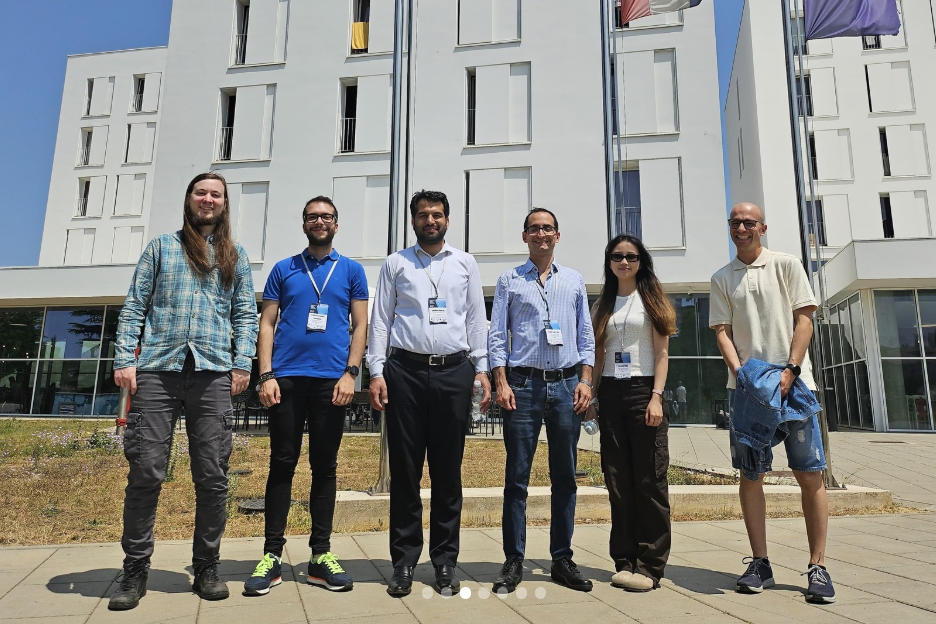
The summer school “Machine Learning for Molecules and Materials Research” has just concluded in Zadar, organized with the support of national and international projects, including the COST Action DAEMON and the Center of Excellence MaX, coordinated by Modena. The school, organized by Prof. Federico Grasselli, brought together young researchers from all over Europe. The school offered a valuable opportunity to explore state-of-the-art machine learning approaches applied to the simulation and design of materials and molecules. Participants attended both theoretical lectures and hands-on sessions on data-driven methods for atomistic simulations, optimization techniques, active learning, and the latest developments in large language models—such as ChatGPT—applied to physical chemistry. With poster sessions and social events, the school provided many moments for discussion, exchange of ideas, and networking.